Is Zionism racism? Yes, of course it is
A lot of self-identifying progressive Zionists reject the question outright, but even when they’re well-meaning people their arguments don’t convince
7 October 2026
Is Zionism racism?
Just to be asking that question on 7/10, a day that has become over-determined by Zionism, is seismic. It’s not the kind of question that could have straightforwardly been asked a year ago and definitely not two years ago. But if we want to begin to understand why 7/10 took the course that it did it’s a question that has to be asked.
Jewish and non-Jewish Zionists universally reject the claim that Zionism is racism. They view Zionism as a national liberation movement that enabled Jews to escape antisemitism and determine their own existence. They argue that because Jews enjoyed a presence in Palestine two thousand years earlier they have a right to the land plus it’s only a small slither of land anyway.
Zionists overwhelmingly believe that they are “good” people, not “bad” people. They might work in schools or hospitals or charities or psychotherapy clinics. They like the idea of multiculturalism and might be friends with some people who aren’t white. They point-blank reject the idea that they support an ideology that is racist because it doesn’t tally with their idea of who they are.
Zionism is, however, racist in two ways: it’s ideologically racist and in practice it has also been racist. This doesn’t mean that Zionists invariably go about thinking that Asian, African and maybe Central/South American people are inherently inferior to them. But Zionism is structurally racist, meaning it is racist in its effects, or that its success requires the subjugation of an indigenous people.
Added to this, Zionism has been inextricably intertwined with European colonialism, which was rooted in a classic form of racism that combined ideas of superiority with capitalist profit. This kind of naked racism is clearly extremely prevalent in Israel today and many aspects of this kind of Orientalist prejudice continue to pervade the West.
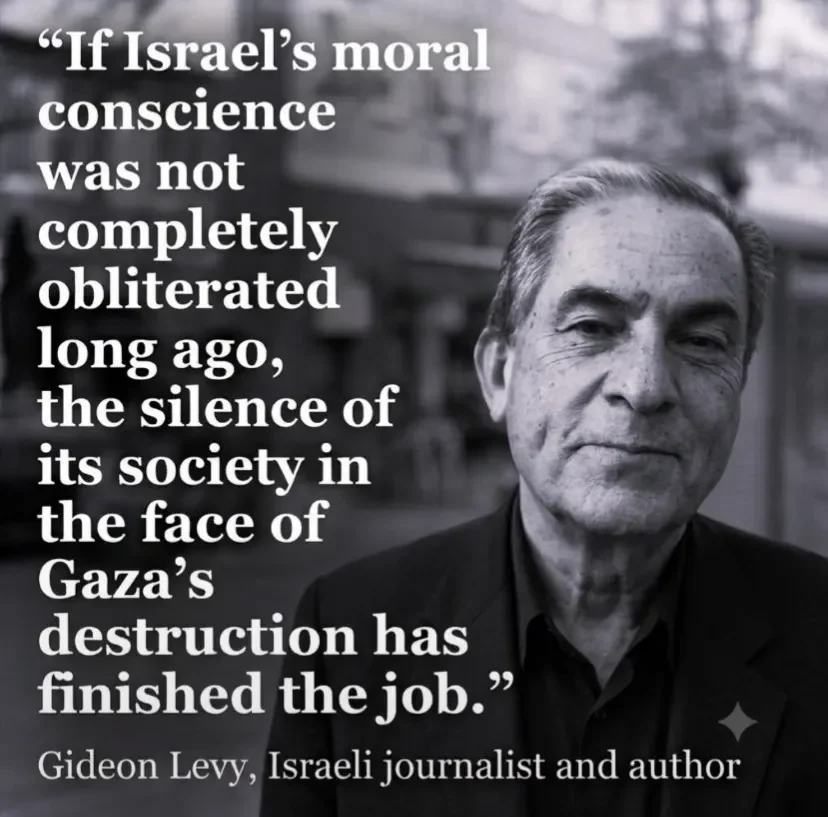
This was particularly clear in the reporting of 7/10, when the Israeli government spread outright lies that played on deeply ingrained racist ideas, including that Arabs are backward, irrational, savage, even monstrous, as Edward Said explained so eloquently and forensically in Orientalism. These included stories that the Palestinians beheaded 40 babies, placed a baby in a microwave, and perpetrated mass rapes. No substantial evidence was ever produced, yet they established a racist ideological justification for Israel’s genocidal response.
Zionist ideology has always rested on the idea that Zionism could only succeed if the Jews established a majority in Palestine and also took control of the land. Without that the Jews couldn’t form a Jewish state. At the time of Zionism’s formation in 1898, the Palestinians owned 99% of the land and made up 90% of the population. The Jews who made up the remaining 10% of the population lived peacefully with the Palestinians and didn’t identify as Zionist. So Zionism had to take control of a land in which Jews were a tiny minority and Zionists non-existent.
Arguing that the Jews could only take control of the land through mass migration, displacement or war, Zionists developed various arguments to support this political ambition. They claimed that the Jewish presence in Palestine some two thousand years earlier—in reality the only period of Jewish control, the Hasmonean reign, only lasted for 77 years between 140-63 BCE—meant the land was rightly theirs. They maintained that the Jews constituted a real people and the Palestinians didn’t, or, as Golda Meir said, “There’s no such thing as the Palestinians.” They repeatedly described Palestine as “a land without a people for a people without a land”. All of these arguments were rooted in demonstrably false assumptions.
This kind of thinking was commonplace in Zionist ideology. Herzl, the founder of Zionism, talked about establishing a Jewish state as “a rampart of Europe against Asia, an outpost of civilization as opposed to barbarism.” Jabotinsky, a revisionist Zionist, described Zionism as a colonising project and argued that Arabs would inevitably resist it. Ben Gurion, the head of the Jewish Agency and future first prime minister of Israel, said in 1937 that “the Bible is our mandate”. In 1938 he added that “politically we are the aggressors and they defend themselves”. In 1944 he admitted that “the transfer of the Arabs this is much easier than any other transfer”. Shortly before he became prime minister he predicted that “war will also bring in its wake a great change in the distribution of [Palestinian] Arab population.”
In short, Zionist thinkers always understood that they could only achieve Jewish national liberation through the repression of the indigenous Palestinian people. Zionists were perfectly capable of being bigoted racists, viewing the Palestinians as inferior. But even if they didn’t subscribe to this form of racism, the ideas they advocated were rooted in the subjugation of another people.
Then there’s the practical impact of Zionism. Again, Zionists like to dream that their impact was progressive. They revived the idea that Israel was the land of milk and honey. They boasted that they made the desert bloom. They introduced democracy to a backwards part of the world. They supported the development of the socialist kibbutz movement. How could any of this be reduced to racism?
In fact much of this Zionist story was trumped up. Palestinian farming was already evolved and much more embedded in the specifics of the local environment. Iranian democracy took root in the early 1940s, before Israel even came into existence, and came to end because the US/UK imposed the Shah. The kibbutz movement was widely seen to be the most advanced of its kind. But it flourished in part due to substantial state support, its deep embodiment in the Zionist project and, above all, the fact that a significant proportion were established on stolen land.
Then there’s the wider, relentless history of structural racism in Israel.
On the eve of Israel’s declaration of independence, the Palestinian population was 940,000, while the Jewish population was approximately 625,000—far short of the majority the Zionist movement needed. This was resolved by the Nakba, the “catastrophe” in Arabic, which led to the killing of 15,000 Palestinians and the expulsion of another 750,000, leaving an estimated 150,000 Palestinians in the land and the Jews with a clear majority.
From its inception Israel also introduced discriminatory laws that were essential to Israel's existence, establishing it as an ethno-supremacist state--or one that denies equal rights to specific groups of its own citizens at the level of basic law. In particular, Jews were given the right to return while Palestinians were denied that right, even if they’d been driven out during the Nakba. In 1949 Israel began to force its Palestinian citizens into segregated ghettos and seized most of their land. The country introduced severe restrictions on Palestinian freedoms and rights. Today there are more than 65 laws that discriminate directly or indirectly against Palestinians. It’s apartheid. It’s racism.
The Six Day War of 1967, which Israel claimed amounted to a preemptive strike despite a lack of proof that any attack on the country was about to happen, of course resulted in the country seizing East Jerusalem, Gaza and the West Bank. In these illegally occupied territories the apartheid conditions are even more severe than in Israel proper.
As the South African novelist and Nobel Prize winner J.M. Coetzee told the Palestinian Literature Festival in May 2016: “Apartheid [in South Africa] was a system of enforced segregation based on race or ethnicity, put in place by an exclusive, self-defined group in order to consolidate colonial conquest particular to cement its hold on the land and natural resources. In Jerusalem and in the West Bank—to speak only of Jerusalem and the West Bank—we’ve seen a system of enforced segregation based on religion and ethnicity, put in place by an exclusive self-defined group to consolidate the colonial conquest, in particular to maintain and indeed extend its hold on the land and its natural resources.”
Israel has since extended its apartheid system. The 2018 “Basic Law: Israel as the Nation-State of the Jewish People” declares that the “right to exercise national self-determination in the State of Israel is unique to the Jewish people”. This means the state’s sovereignty is fundamentally defined by its Jewish character and not by the equal citizenship of all inhabitants. The Death Penalty for Terrorists Law, passed in March 2026 makes the death penalty the default sentence in military courts for Palestinians convicted of lethal “terrorist” attacks.
At some point early in the genocide a historic friend from the Jewish-Zionist youth movement that I grew up in became upset when I said that Israel is an apartheid state. His response was to argue that, no, apartheid denotes the worst kind of racism, the kind we associate with South Africa. He said Israel can’t be compared to South Africa. I did my best to explain why the comparison is legitimate and in many respects Israel’s apartheid has gone far further than was the case in SA. At the time he simply wasn’t intellectually or emotionally ready to even contemplate the argument. But maybe one day he’ll come around to it. After all, he resisted the idea that Israel has perpetrated a genocide for close to two-and-a-half years, then one day he accepted that—so things can change over time.
This practical rollout of racism has only accelerated in Israel and the occupied territories in the last 20 years. In 2005 Israel sealed off Gaza, intensified its blockade in 2007 and in 2021 completed the construction of a 65-kilometer smart fence. Throughout this period the IDF conducted regular massacres that it would refer to as “mowing the lawn”. Gaza’s economy, food security, health sector, and water and sanitation facilities all declined markedly.
It’s hardly a coincidence that, soon after Hamas’s achieved its surprisingly successful breakout and attack on the IDF on 7/10/2023, two successive waves of attackers followed in Hamas’s slipstream. Neither of these waves was anticipated or coordinated by Hamas. These waves burst out of what Israeli sociologist Baruch Kimmerling described as the “world’s largest concentration camp” as long ago as 2003. They came face-to-face with ravers fleeing the Nova music festival, which was held on land Israel seized in the slipstream of the Nakba. After years of systematic repression, during which many Palestinians grew to associate Zionism with racism, the pressure cooker exploded.
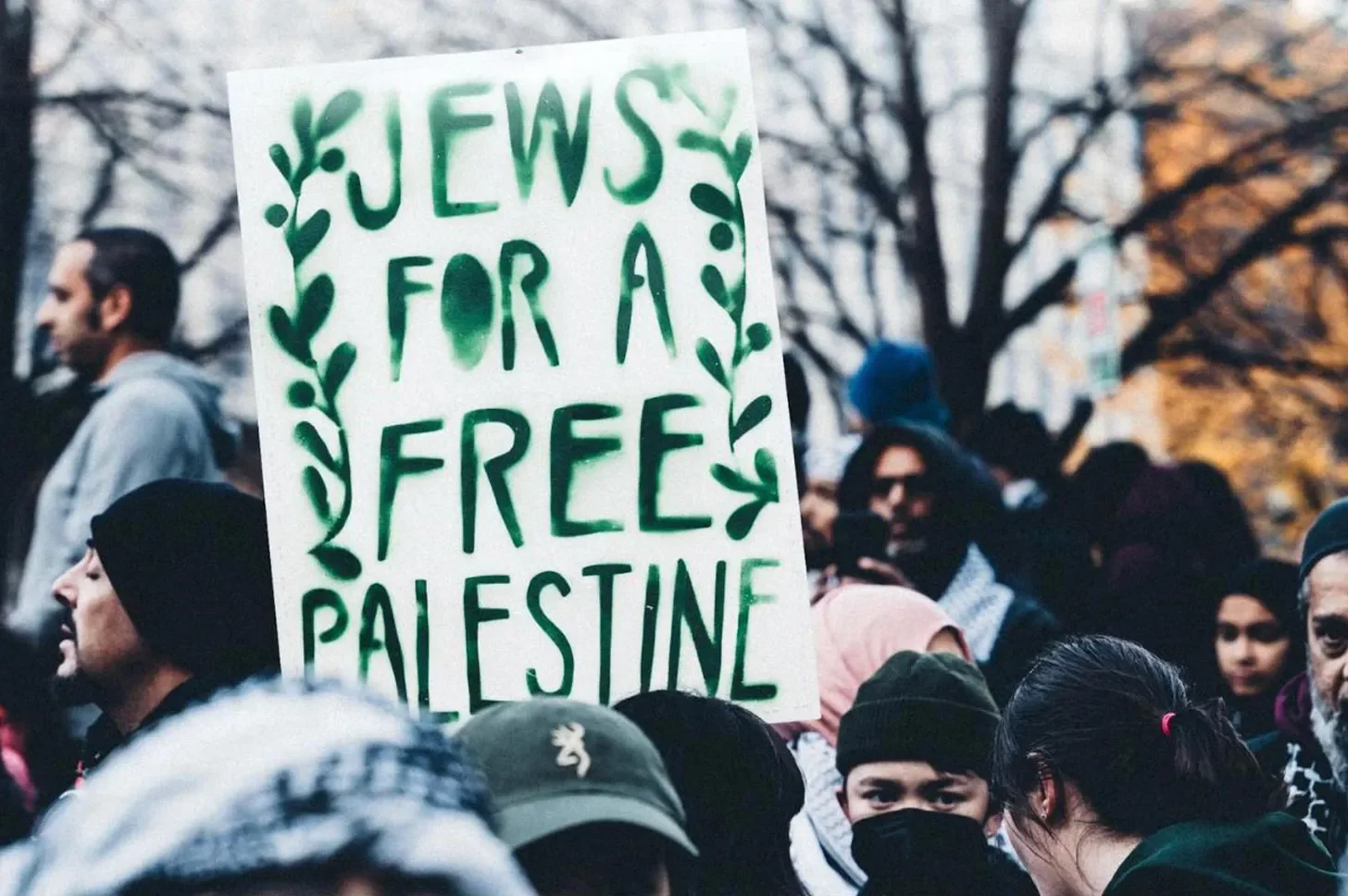
To be clear, I’m not condoning any attack on any civilian. I’m merely outlining the conditions that surrounded the events of 7/10. If we are to condemn the killing of Israeli Jews on that day it is only right that we first condemn Israel for killing 148,000 Palestinians between 1948 and 7/10/2023 while recognising the systemic ethnic cleansing and apartheid laws that robbed them of their land and their freedom—at the expense of Jewish Zionists pursuing their own liberation.
It’s also important to note that part of the racism that defined the circumstances of 7/10 involved the failure to report on the Israeli government’s activation of the Hannibal Directive. This required the IDF to kill any Israeli Jews who risked being taken hostage. Ultimately we will never know how many ravers were killed by the IDF. Asa Winstanley, who is finishing a book on 7 October, estimated in a forensix article published in the Electronic Intifada on 7 October 2024 that it runs to the hundreds. Ultimately we will never know the final figure because the Israeli government contaminated the crime scene and refused to conduct a proper enquiry.
What we do know is that only Israeli Apache helicopters equipped with Hellfire missiles could have conducted the scorched earth attack on 280 cars that were burnt beyond recognition. This point was first made by Max Blumenthal in Grayzone on 27 October 2023 and has been affirmed by other independent journalists. The Palestinians didn’t have the equipment required to do that kind of damage. How many Israeli Jews were inside those cars during the attack remains unknown.
All of this Zionist racism unfolded before the Israeli government began to perpetrate its genocide against the Palestinians. The basic reality that a genocide has taken place is supported by scores of independent reports comprising thousands of pages from UN, human rights, aid, medical and legal organisations plus scores of genocide scholars. Genocide is the greatest crime known to humanity and is invariably rooted in a hatred of the other. The denial, obfuscation and deflection of genocide—which is ubiquitous in Israel and the western political, media and judicial establishment—is itself racist.
It’s also important to note that although there are pockets of resistance and truth-telling, racism runs throughout Israeli society. There is near-unanimous support for Israel’s basic approach to the Palestinians. Opposition parties might disagree with Netanyahu’s execution of the approach but they don’t disagree with the approach in any significant way. Opinion polls consistently show very high support for the ethnic cleansing of Gaza and the takeover of the West Bank, never mind the invasion of Lebanon and the two wars on Iran. Israelis constantly spew out racist attitudes on social media.
Bearing all of this in mind, it’s interesting to remember that the IHRA definition of antisemitism stipulates that it’s antisemitic to deny the Jewish people their right to self-determination, “eg, by claiming that the existence of a State of Israel is a racist endeavour.” This weaponisation of antisemitism to prevent debate about Israel and the development of an obvious argument was anti-intellectual and repressive of free speech. Supported by Jewish Zionist intellectuals across the board, the move also represented one of many moves that actively risk creating antisemitism by irrevocably aligning Jews with the actions of a racist and now genocidal political entity—Israel.
To address what’s been going on with the Greens, the party is completely justified in addressing the question of Zionism and its connection to racism. Political parties have been able to address any number of discriminatory entities over the years, including of course South African apartheid. Winston Churchill is still celebrated for standing up to the German Nazis—and many Jewish Zionists have been supportive of that.
The sweeping condemnation of the party by the mainstream media has exposed the incredibly fragility and narrowness of free speech in the UK as well as the health of UK democracy. As we witnessed when Jeremy Corbyn became Labour leader, a certain set of pro-Israel individuals and institutions get to decide what we can and can’t talk about.
On the question of the party’s strategy, it’s reasonable to raise questions about this. I heard Ash Sarkar say that it would have been better if the party had brought forward a motion that said it would prosecute Keir Starmer (and hopefully those who worked alongside Starmer, in particular David Lammy, Yvette Cooper and Richard Hermer) for the Labour government’s complicity with Israel’s genocide. I think this would have been a neat move—but I’m not that into the whatiffery.
Clearly the vote has created a certain amount of complexity in the party. The motion wasn’t supported unanimously. But it’s also the case that this is how democracy works. Having internal debates and working out how to take a political party forward is healthy—and is far healthier than what’s going on in the mainstream media or any other political party, including the Labour Party, where the debate remains incredibly contained. The mainstream narrative has it that the motion was passed by newer members of the Greens. If that was the case then the newer members are far more numerous than the older members.
I don’t know if the conference particularly wanted the vote to take place just days before today’s by-election in Holborn and St. Pancras. But again many of us have lost interest in a parliamentary process where everything is shaped according to a timid political strategy that will adjust itself to achieving the next political objective. We’ve seen many potentially progressive parties become completely ineffective through such electioneering. As for today’s vote, we don’t yet know what will unfold. Maybe the storm around the Zionism-is-racism policy will lead to the Greens crashing. Or maybe voters will be more encouraged to vote for the Greens—because UK opposition to Israel has grown stronger. Either way, voters increasingly deplore parties that play strategic games. Boldness, clarity and honesty are the way to go.
Should we be blaming the sponsors of the motion and their supporters for taking attention away from the core Green policies that relate to housing, the economy, green infrastructure and so on? No, the conference was right to consider international as well as domestic issues, especially as those international issues impinge directly on the UK. It’s the responsibility of everyone outside of the conference, including the media, to report on those wider issues. Of course the mainstream media has no interest in reporting on the Greens in a responsible, intelligent way—but that trend was established long before Sunday’s vote.
It’s clearly important for the party to make sure that Green Party members who identify as Zionists are not hounded out of the party. Parties need to be broad alliances that incorporate a range of people. The debate that needs to be had about Israel and Zionism is only just beginning. It’s important that it’s conducted in an open, engaging and non-accusatory way. The Green Party leadership needs to take responsibility for making sure that pro-Israel members don’t face intimidation, just as those members need to show an awareness that their opinions might not be popular and certainly might not be reflected in party policy.
To bring up South Africa again—and bearing in mind that South African apartheid wasn’t as extreme as Israel’s apartheid—should pro-SA apartheid members have been tolerated in left-of-centre or soft-left political parties during its highpoint during the 1960s-80s? What if these members had family members who lived in South Africa? Or were concerned about prejudice being expressed against South Africa’s white population? These are complicated issues. Overall I’d prefer to keep people involved, even if I don’t agree with them on everything. It’s usually the case that people who hold genuinely objectionable views that are incompatible with progressive values will end up leaving on their own accord.
I feel a bit more conflicted about the party’s vote to support a one-state solution. I’ve just long taken the line that what I do or don’t support is irrelevant—so I will support whatever the Palestinian leadership supports.
Having said that, from afar I concluded a while ago that two-state solution doesn’t seem to be viable given that Israel has destroyed Gaza and has taken over the West Bank. One state also jolts the complacency of those who support two states, which has become a euphemism for looking like you’re on the right side of history while being committed to nothing. Still, Hamas was the last party to be elected in Gaza and they support two states. I also fully understand why the people of Gaza might not want to live alongside Israelis who’ve cheered on their annihilation.
I don’t know what the deal is in the Green Party, but I’d be extremely surprised if the conference believed that it should be the authors of whatever settlement is finally reached. Let’s also not forget that many of those who are criticising the Greens for daring to squeak have long since pronounced their own preferred solutions!
One more point on the question of the one-state solution. For the longest time people respond to this by arguing that the policy calls for the destruction of the state of Israel. In the same breath they say, “What’s supposed to happen to Israel’s eight million Jews?” It simple. One-state doesn’t call for the destruction of anything. It calls for Israel to become a state that treats all of its citizens equally and to extend the Law of Return to Palestinians. The constitution would guarantee basic rights and protection of all citizens. Zohran argued for this eloquently during the mayoral campaign. As for the eight million Jews, they remain.
I don’t expect the mainstream pro-Israel lobby to listen to any of this because for the time being they’re not interested. The response to the Green Party motion has been apoplectic. How dare anyone conclude that Zionism is racism after systematic ethnic cleansing, occupation and for the last three years a genocide?!?!?! This from a group of people who've yet to name Israel's genocide a genocide...
The reaction of the Guardian is particularly revealing. As per usual its columnist Jonathan Freedland--someone I was very friendly with during my gap year in Israel until we went in very different directions thirty years ago-- led the charge. He complains that "The Green party's anti-Zionism motion is yet another attempt to tell Jews how we should think". This is from someone, last time I checked, hadn’t mentioned the word genocide once, hadn’t written an article about Islamophobia but managed at least eight on antisemitism, and had portrayed the solidarity demonstrations as borderline antisemitic, while while clamping down on anyone who asks serious questions about Israel--because these people need to be told what to think.
The Guardian has already published several articles forecasting the end of the Green Party. Honestly, you only need to prod at the Guardian just a tiny little bit for it to reveal what it is. But we’ve already been here during Jeremy Corbyn’s tenure as Labour leader 2015-19. Rebecca Gordon-Nesbitt notes in her excellent book "Killing Corbynism" that between 2016-19 the Guardian published 1,215 stories mentioning Labour and antisemitism--and during the same period just 194 articles about the Conservative's far greater problem with Islamophobia." In the end the investigations into antisemitism in the Labour Party under Corbyn found the same thing again and again and again: criticism of Israel.
Ultimately the pro-Israel establishment will attack on any discourse that slips out of its control. What the Greens are going through is just the start. I don’t doubt that the storm will continue and that they’ll also ride the storm. Where this ends up electorally, not just in the by-election but also beyond, nobody knows.
In contrast to the Guardian, here's an excellent overview from the always-excellent Richard Sanders at the always-excellent Double Down News:
To end on a more personal note, many of us have been on a journey and some people travel at different speeds. Looking back, I took my own time. During the course of some 45 years I went from being a “socialist Zionist” who tactically accepted that a two state solution was the best possible outcome to someone who in the mid-1990s started to identify as a non-Zionist. Back then I felt it would be too incendiary to identify as an anti-Zionist. Many youth movement friends would go ballistic. So I said: I can’t identify as a Zionist because I’ve yet to be told how Israel could have been created in an ethical way or be told how Israel has even contributed in an overall positive way to Jewish existence. It wasn’t until the genocide began that I belatedly came out as an anti-zionist.
This doesn’t mean that I think that everyone who is a Zionist is a racist per se. Many Zionists—I’m talking about people I know, here, not thugs on social media—hold the views they hold because they’ve gone through immersion programmes that have been reinforced by families, friendship groups and wider society. I prefer to engage in discussion when that seems possible versus insulting them and breaking off relations. Along the way I’ve been dropped by a number of friends/ex-friends—but hopefully have introduced some ideas to others. Either way, in the final instance those of us who are white need to accept that we can hold ideas that are unconsciously racist and might do well to hold back from pointing figures.
Having said all that, I do believe that, wittingly or unwittingly, Zionists support an ideology that is racist, I’ve been happy to have that conversation in the past, and now the conversation has burst into the public domain.
The UK solidarity movement will gather at the Victoria Embankment at 12:00 noon this Saturday, 10 October, to demand that the UK government stops selling weapons to Israel, introduces a full trade boycott and revokes the proscription of Palestine Action.