NAZA: the banality of evil, Generation G and the Guardian's problem with genocide
26 October 2026
Last week I went to see NAZA, the Israeli investigative documentary film that exposes the way the IDF’s system for targeting Hamas operatives also kills civilians—transparently tens of thousands of them. It’s directed by Israeli Jews Yuval Abraham and Rachel Szor, who previously co-directed No Other Land (NOL) with West Bank Palestinians Basel Adra and Hamdan Balla. From everything I’d heard in advance, I expected NAZA to be more distressing than NOL, which tracks the destruction of a Palestinian community in the West Bank, but at least until its last scene NAZA is, for me, less emotionally gruelling than NOL. Instead it’s a deeply disturbing film that transports us into the assembly-line process of Israel’s genocide—and in this way, knowingly or unknowingly, aligns it with Nazism.
NAZA is the Hebrew acronym for “nezek agavi” or “collateral damage”. It references the number of civilians the IDF takes out while targeting someone they loosely calculate to be a Hamas operative. Drawing on research established by +972 Magazine, Abraham and Szor conducted more than 100 interviews with Israeli soldiers and intelligence personnel, most of them from the elite end of the IDF that handles digital surveillance and AI-directed operations, before deciding on the 24 they wanted to use. Close to the start of the film they introduce archival footage that explains how Israel built the entire telecommunications network in Gaza so that it could spy on every resident at once. But only during the genocide that began at 8:24am on 7/10 has it been able to maximise the murderous potential of its tech industry.
Algorithm killers
All of the interviews are conducted at night on the rooftops of Tel Aviv. The informants—their faces in the shadows and voices moderated so they can’t be identified—provide a forensic outline of the automated toolchain that enabled them to identify Hamas operatives.
The process begins with Lavender, an AI-assisted target generation tool that analyses massive amounts of surveillance data and awards each Gaza resident with a score that indicates the likelihood that they’re a militant. Lavender doesn’t actually know who is and isn’t a Hamas operative. It’s just adept at pattern-matching, so checks if individuals under surveillance happen to be in the same WhatsApp or Telegram groups as other militants, or display certain patterns that could be associated with being an operative, such as changing phones or addresses frequently, or having data connections with people who’ve been previously flagged. According to +972 Magazine, by April 2024 Lavender had already generated 37,000 recommendations. It’s a bit like a Facebook algorithm for serial killers.
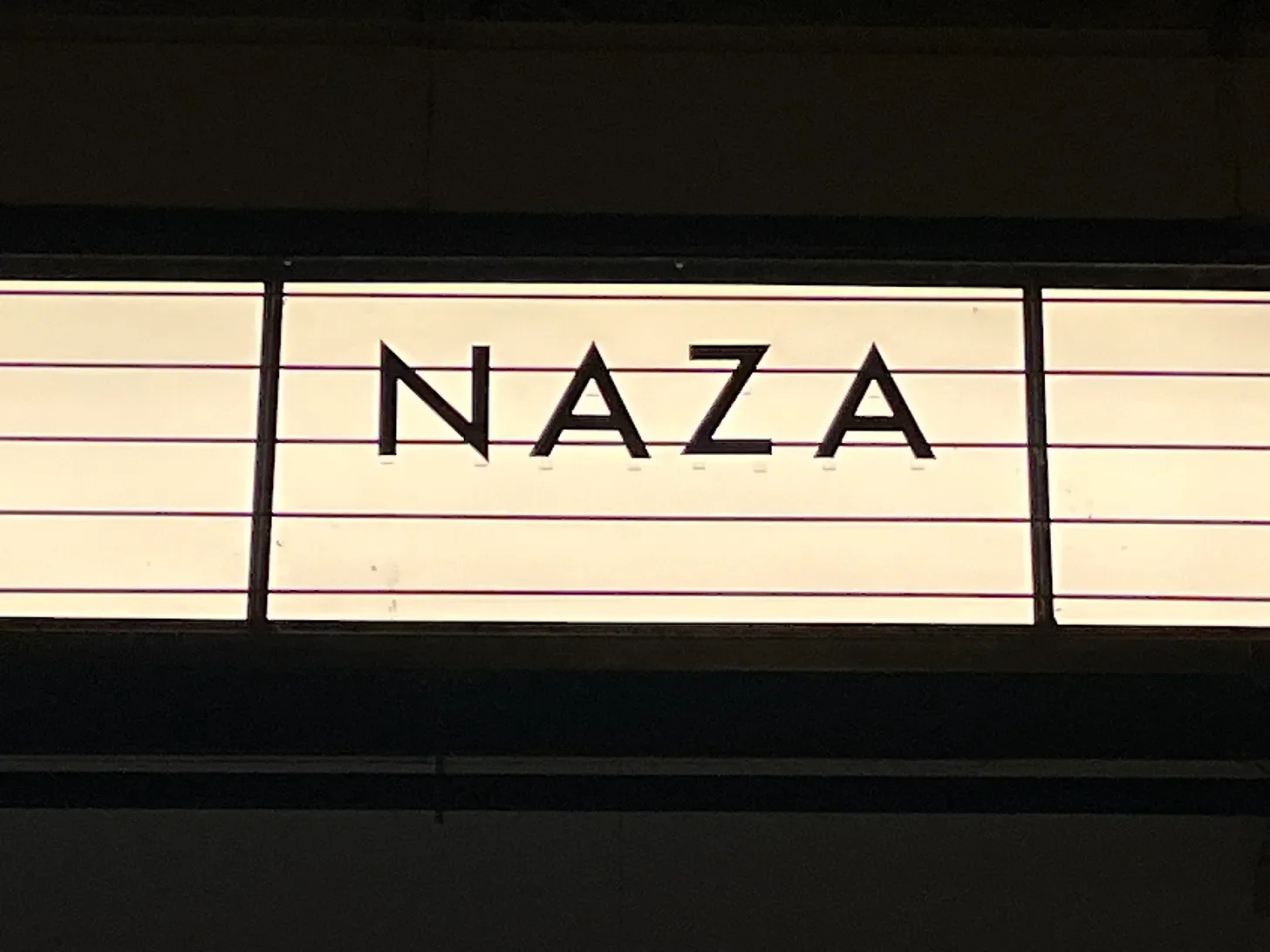
NAZA showing at the local cinema.
Lavender works in tandem with two other pieces of AI-assisted software. First, there’s Gospel, a product of the Israeli tech giant Palantir, which, for info, recently won a contract with the NHS, just in case you live in the UK and are not already prone to anxiety or heart palpitations. Gospel compiles a database of military targets. Second, there’s Where’s Daddy, which alerts IDF operators to the moment a Lavender target enters a private home. As an interviewee explains, Where’s Daddy refers to the surveillance technique of spying on a child’s phone to work out when the child’s father will return home because that’s the easiest place to confirm their location. The system isn’t in the least bit concerned if any airstrike will take out an entire family or even everyone in the same tower block.
Whereas the IDF has maintained that all strikes undergo human review, the NAZA informants describe a system where human approval amounts to a rapid click on an AI-generated target—a formality—rather than a substantial review. The process is inevitably dehumanised. One interviewee reveals that he and his colleagues referred to civilians not as people but as NAZA—not “15 people will die but 15 NAZA”. Strikes could take out 15 NAZA, 20 NAZA, even up to 500 NAZA, as happened on one occasion. Another interviewee casually acknowledges that he’d been involved in killing “probably thousands”. It was and remains a video game, but for real. The essential take is the operatives knew they were mass-killing Palestinian civilians alongside alleged Hamas operatives and continued all the same.
Knowledge of Israel’s industrial-scale use of AI to destroy residential buildings full of civilians has long been understood, as has its use of Amazon, Google and Microsoft to process and store the data that fuels the system. Yet it was chilling to hear the operatives describe the process in such a matter-of-fact, nine-to-five way. Even though their presence is filtered by shadows and overdubs, they come across as a clearly unemotional grouping that doesn’t do remorse or anger. They don’t fit the Israeli archetypes of the marauding settler, the suited fascist, the self-righteous nationalist or the self-pitying liberal. Instead they represent an emergent class: educated, urban, elite tech workers who believe they’re anti-racist yet have been tapping away on the genocidal keyboard. Most of them appear to be part of Generation Z but really they’re at the apex of a new generation—Generation G.
The closest the informants get to acknowledging the gut-wrenching consequences of their work arrives when one recalls being unable to look at a dog eat the body of a Palestinian who’d been shot while queueing for food—but he adds that his colleagues didn’t have a problem viewing the scene. Overall they variously offer that they find their work exhilarating, or acquiesce with the reigning view that all Palestinians are culpable for 7/10, or simply think of their work like any other tech job. Certainly they don’t convey any hint of the PTSD that’s supposed to have reached epidemic proportions amongst troops who’ve served in Gaza.
Ultimately the film doesn’t reveal if the interviewees are still employed in the same military-tech jobs or if they’ve quit, if they’re in the present or past tense, if they’re good with mass murdering Palestinian civilians or have experienced an epiphany. No information is provided on where they’ve come from or where they want to go. In part this was necessary. Abraham and Szor have explained that they took the utmost care to not give away any aspect of the identify of the interviewees in order to protect them. It’s also hard to imagine any stepping forward if anonymity wasn’t guaranteed. Yet the bland normalcy of the informants is central to the film’s power. As hard as it is to fathom the film’s lack of affect, or to accept that it doesn’t provide stories of evil and redemption, the lasting impression is that the directors refuse to impose narrative arcs or stir up feelings because their informants are part of a machine and see themselves in these terms.
Others have noted that Hannah Arendt’s description of Eichmann as he stood in the dock while being tried for war crimes—a “weak, vain, mediocre man in appearance and intellect with a propensity to speak in clichés” who was defined by his “thoughtlessness”—captures the film’s presentation of the interviewees as the latest surprising, terrifying incarnation of the “banality of evil”. One of the them says in the style of detached sociology that he’d always wondered how the Nazis were able to live with themselves but now understands that it’s easy. When Abraham asks another if Israel’s actions in Gaza amount to a genocide he says that of course they do. Is he therefore partly responsible for the genocide? Of course he is, he replies. His speech is monotone and monosyllabic. Hopefully he’ll find himself in the dock too, one day.
The banality of the IDF tech operatives encapsulates the distinction between NAZA and Abraham and Szor’s No Other Land. Whereas NOL captures the messianic sadism of the settlers and the visceral brutality of West Bank apartheid, NAZA stays with the impersonal, data-driven work of the IDF’s tech elite and the screen-led genocide they coordinated (and continue to coordinate) from afar. Although we don’t really get to know them, these tech bros come across as being boring. It’s easy to imagine their daily hipster schedule: drink espresso, check Where’s Daddy, eat sushi, kill family, go for swim, order delivery, watch film, joint, bed. But that’s precisely the point. NOL records the deranged psychosis of the self-proclaimed Zionist avant-garde, spit coming out of settler mouths as they yell. NAZA focuses on operatives who are a “cog in the machine”, as one informant puts it, twenty-somethings who view data harvesting as a cutting-edge way to pay the rent.
It’s this that aligns the informants of NAZA much more closely with Nazism than the settlers, whose love of pogroms places them in the late imperial era. Yet if the assembly-line reality of the Gaza genocide prompts one informant to think of Germany, the underlying process has shifted from Nazi industrialism to Israeli postindustrialism. Supporters of the new model often note how it carries the potential of greater flexibility and choice, but there aren’t too many buildings left standing in Gaza. The tech bros appear to have clicked “play” for the destruction of most if not all of them.
Tel Aviv towers
The cinematography, which revolves almost entirely around the glass-and-steel residential and office buildings of Tel Aviv interspersed with Abraham’s shrouded rooftop interviews, provides an improbably mesmerising and politically sharp backdrop to the interviews. It’s almost as if Szor, who operates the camera, got bored of shooting silhouettes early into filming so started to pass the time by creating a lulling inventory of the city’s towers. The camera moves across the tower blocks in the manner of a synthetic rendition of the Goldberg Variations. The juxtaposition of these accumulating, soullessly-perfect buildings with the talk of blowing up Gaza apartment blocks filled with families exposes the callous cruelty of the metropole to devastating effect.
Szor develops the point with aplomb. Her close-ups reveal luxury interiors featuring cinematic TV screens populated by newsreaders and politicians who can only reproduce state-generated propaganda, finely-finished sofas upon which a stain could ruin the goal of magazine perfection, voice-sensitive lighting systems that will never hear anyone speak Arabic, even freshly-kneaded, oven-ready dough that contrasts with an informant’s story about the successful targeting of a baker and his family, taken out because Lavender believed the bakery was frequented by Hamas fighters. These are all glimpses of the lifestyle of property investors or tech entrepreneurs. Maybe some operate AI for the IDF.
Just observing the mere existence of so many pristine, super-modern complexes was quite surprising to me. I visited Tel Aviv a few times during my gap year in Israel back in 1985-86 and for a few post-university summers when I wanted to visit a friend from the Jewish Zionist youth movement I was part of during my teenage years and early twenties. I remember Tel Aviv being low rise and ramshackle, not in a particularly attractive way. NAZA revealed to me that it’s become this gleaming, hyper-capitalistic metropole—a city that’s shimmered with glee while its stock market has doubled in value during the genocide.
Intrigued how this came about, I learned that Tel Aviv has over 150 luxury high-rise apartment blocks and modern office towers that are 100 meters tall plus 67 that are 150 meters tall. One district is called Park Tzameret, another Rothschild Boulevard. Driven by Israel’s expanding finance, tech, defence and cybersecurity sectors, the building boom began in the late 1990s and accelerated during the 2010s. It’s standard for the status-symbol residential complexes to include fitness centres and swimming pools—did I need to even mention that? Companies including Google and Meta have mass-leased spaces in new office buildings, stimulating further development.
Abraham and Szor interviewed more than one hundred sources for NAZA. The 24 interviews they used were all conducted on the roofs of Tel Aviv buildings, some of them probably high-rise. It’s easy imagine that some or many of interviewees are therefore well-paid tech employees who lived inside the towers captured by Szor, beneficiaries of the genocide bubble. Some of their predecessors might well have used their time in the IDF as a stepping stone to founding a cybersecurity start-up that they could go on to sell for the kind of windfall that can buy an apartment outright. Reports show that many of Israel’s tech elites come from a military intelligence unit called Unit 8200.
The towers capture the totalitarian quality of a narcissistic empire that combines tech, neoliberalism and genocide. The gleaming steel-and-glass towers of NAZA reminded me of the antiseptic dystopian buildings of the Tyrell Corporation in Blade Runner. It’s not an exact parallel. While Tyrell builds his off-world colonies using replicant slave labour while the general population lives in a decaying infrastructure, in Israel the AI elite inhabit pristine towers while Gaza is reduced to rubble. Also, one is fiction, the other fact.
A 1984/Big Brother element also runs through NAZA, from the threat to dissent to the moment when the constant traffic comes to a halt to honour Holocaust Remembrance Day. To mark the occasion, a continuous, flat siren wails out as Israeli citizens stand motionless as they’re reminded that they must never forget, never move on from something virtually none of them lived through. They are always ready to honour the victims of the Nazi genocide but refuse to acknowledge the victims of the genocide they have perpetrated.
Reception, rejection
Israel has operated as a deeply propagandistic society from its birth—for instance that it provided a “land without a people to a people without a land”. However the accelerating takeover of the media and tech sectors during the course of the last 30 years has produced not only a boom in algorithmic software that’s enabled Israel to pioneer a new way to perpetrate a genocide but also a society that increasingly thinks according to the self-generating singularity of algorithm. Has there ever been a “democracy” that’s so unified in its thinking?
This has been demonstrated throughout the current election campaign. Israel’s treatment of the Palestinians isn’t even an issue. There is no talk of the genocide, of ending the occupation or supporting Palestinian self-determination. Instead the overriding issue is whether Netanyahu has been sufficiently effective is asserting Israeli domination: why was 7/10 allowed to happen, why hasn’t Hamas been wiped out, why is the northern border still vulnerable, why hasn’t Iran been defeated, why has he weakened rather than strengthened Israel’s international standing?
In more general terms, Israeli Jews repeatedly portray themselves as victims who are also stronger than anyone else. They regularly respond to any kind of challenge with a mix of aggression, denial and disdain. Through war, surveillance, property investment, dual citizenship and tourism, they go wherever they want (unless a country has started to bar their entry) and do whatever they like. According to reports, they behave like colonialists when they travel to Indonesia, Indian, the Philippines, Sri Lanka, Thailand and Vietnam. They’ve mass purchased property in Cyprus, Dubai, Greece, Portugal and more recently Sweden, often establishing concentrated “Little Tel Aviv” outposts or gated communities. They abuse cafe owners who display pro-Palestine signs. Those who challenge them are often told to beware the exploding pager—one of Netanyahu’s favourite lines—or the latest Israeli-generated iPhone tracking device.
The spread of this mentality—fascistic in the way it figures anyone who isn’t a supporter as an enemy—helps explain Israel’s meltdown response to NAZA even though nobody in the country has watched it. Politicians and journalists argue the documentary is rooted in lies, insisting that the anonymity of the informants means the whole story is fictional—even though they hold their own off-the-record briefings and meetings all the time. IDF leaders have denied the claim that AI-led surveillance techniques have killed more civilians than necessary. There have been repeated calls to revoke the citizenship of Abraham and Szor.
Miki Zohar, the Culture and Sports Minister, threatened sanctions against any institution that screens the film, accused the filmmakers of “treason against the state”, and threatened to revoke their citizenship. Netanyahu promised to introduce legislation that will also revoke the citizenship of others who “defame” soldiers or the state. “Criticism is legitimate in a democratic society,” noted opposition leader Gadi Eisenkot, “but there is a vast chasm between it and the act of besmirching our soldiers’ names simply to garner applause at festivals abroad.” Eisenkot also accused the directors of “moral blindness”—but hasn’t seen the film. Long live Israeli democracy, the bedrock of IDF impunity.
NAZA will surely give diasporic liberal Zionists a different kind of jolt. This group has only recently, hesitatingly and partially accepted that Israel has perpetrated a genocide—”partially” because figures ranging from foreign secretary Ed Miliband to prime minister Andy Burnham to leading liberal Zionist columnist Jonathan Freedland still haven’t managed to reach this screamingly obvious conclusion. Against overwhelming evidence, they’ve placed fruitless hope in the belief that opposition to Netanyahu signifies support for a two state solution and justice for the Palestinians. Yet the fact that Abraham and Szor can no longer contemplate returning to live in Israel without being attacked confirms that Israelis are nowhere near ready to acknowledge even a fraction of their culpability. At least if liberal Zionists watch NAZA they can begin to understand how their ideology has led them to play the role of bystanders.
While I understand the frustration that no Palestinian director has received anything like the attention of Abraham and Szor, that’s the responsibility of the western mediascape and the Zionist annihilation of Palestinian voices. I empathise with those who wish that Abraham and Szor had made a film that featured Palestinian voices or was based in Gaza, but their purpose was to expose the actions and psychology of IDF tech operators in the face of Israeli and western denialism, and they interviewed the right people for that important task—plus faced substantial constraints every step of the way.
NAZA amounts to the highest-profile Israeli-Jewish stand against the genocide to date. It follows the example of journalists such as Gideon Levy of Haaretz and the Israeli human rights organisations B’Tselem and Physicians for Human Rights Israel. To acknowledge the film’s importance doesn’t require us to treat Abraham and Szor as “white saviours”, as some have maintained. Nor does it mean we have to forget about the extreme structural disparity that exists between the directors and their Palestinian counterparts, in particular the 270 Palestinian journalists Israel has murdered since 7/10. Yes Abraham and Szor are privileged, but so are many white journalists who live in western countries that support Israel.
The near-complete absence of Palestinians in NAZA contributed to me feeling more emotionally detached from it than I did from No Other Land. Yet—and if you don’t want to know how the film ends skip the rest of this paragraph—the introduction of the Palestinian experience in the film’s final sequence is stunning. Shot on a phone, the short episode consists of a father searching for his son and daughter beneath the rubble of a building that has indeed just been destroyed by the IDF in Gaza. He is distraught as he tries to listen out for a voice or the sound of breathing or any indication of life. “Didn’t I tell you to take care of your little sister?” he calls out to his missing son, one of 21,900 children killed by the IDF in Gaza since 7/10, many through Where’s Daddy? As the camera circles the scene it shows the feet and legs of several other children buried beneath the debris. They and the father’s children are all NAZA.
The Guardian’s problem with genocide
I found myself feeling much more bothered about the Guardian’s role as the producer of NAZA than the involvement of Abraham and Szor. If the Guardian enabled the film to come to fruition then of course that’s welcome. But the wounds run deep with the Guardian, which for decades has presented itself as the presiding voice of the liberal-left while neutering or discrediting voices that seek to bring about meaningful progressive change.
In particular, the Guardian played a leading role in the pro-Israel establishment’s campaign to undermine Jeremy Corbyn’s Labour Party by repeatedly spreading false allegations about antisemitism. More recently it has joined the same establishment’s systematically ruthless attempt to destabilise Zack Polanski’s Greens as the party became more radical, sharpened its critique of Israel’s genocide and gained in popularity. The attack recently reached a crescendo when the Greens passed an analytically and morally coherent Zionism is Racism motion at their party conference.
The Guardian’s reporting of the genocide has also been deeply problematic. The newspaper published unsubstantiated allegations that Hamas fighters committed mass rapes on 7/10, which helped lay the ideological groundwork for Israel’s unhinged response. It radically diluted the Haaretz report on Israel’s activation of the Hannibal Directive on 7/10, which led the IDF to kill dozens if not hundreds of Israeli-Jewish citizens. In 2025 it belatedly argued that the UK should stop selling arms to Israel, but then backed the Burnham government’s announcement it would only end trade with West Bank settlers—or 0.6% of UK trade with Israel. Overall the Guardian has systematically downplayed Israeli violence through the use of passive voice, obscured language, selective reporting and negative qualifiers, UK media monitoring organisation NewsCord concluded in April 2026 after surveying 11,295 excerpts from four media organisations. Meanwhile editors have clearly constrained Guardian reporters from using the word genocide to describe Israel’s genocide.
When I learned that the Guardian was the produced of NAZA I was surprised. I wondered if the newspaper was responding to the widespread dismay of its staff and readership at its tame if not complicit reporting. Then I realised that the Guardian blurb for the film doesn’t use the word “genocide” but refers instead to mass killings and the like—even though international, aid, human rights, legal and medical organisations plus genocide scholars agree that Israel has perpetrated a genocide. The act of producing a film about a genocide while marketing it as something that doesn’t qualify as a genocide obviously plays into the hegemonic western establishment poison that has also refused to conclude that a genocide has taken place. Mixing gaslighting and treachery, the Guardian still can’t commit.
No Guardian journalist has used the word “genocide” to describe Israel’s actions in the numerous articles it has published about NAZA. Its review of the film doesn’t just evade the g-word but labels 7/10 as a “grotesque antisemitic pogrom”, describes Hamas combatants as terrorists, describes the informant’s perfectly reasonable reference to Nazi Germany as “ahistorical” and disparages the use of anonymous interviewing as being “supposedly for journalistic secrecy”—Israeli hasbara points all lined up in a neat little line. It also appears that the Q&A held at the film’s premiere in London, which included Abraham and Szor plus two Guardian contributors but of course no Palestinians, didn’t reference “genocide” either.
Katharine Viner is in charge—what’s her problem with using the word genocide? Is she worried that Freedland will lecture her, or that the Chief Rabbi and Board of Deputies will call her an antisemite? That she’ll be mauled like Jeremy and Zack? Or has she simply spent so much time prevaricating, obfuscating and dodging on this question she doesn’t even know how to lead with clarity?
The erasure also raises the question of whether the Guardian has attempted to influence the film’s editorial direction. Abraham in particular has been clear in interviews that Israel has carried out a genocide, yet the film only raises the matter via two back-to-back questions from Abraham. The closing credit references “mass killing”, not “genocide”. All in all it’s easy to imagine the Guardian striking an NDA with Abraham and Szor that offered production in return for the directors all but erasing the term. Whatever the truth might be, the Guardian has succeeded in preventing reporters from adopting, say, the Al Jazeera usage of “genocidal war”, which appears in just about every article about Gaza Qatari newspaper publishes.
As welcome as support for NAZA is, the Guardian’s liberal Zionist contingent is winning every battle that matters, from restricting action to sanctions on West Bank settlers only to pretending that the Labour Part is serious about change when it’s clearly not to attacking any political leader that offers a serious challenge to Israel to refusing to name the genocide. Viner should conduct a serious review into the Guardians systematic failure to ethically and professionally report on a genocide it still can’t bring itself to name. In the meantime my suggestion is to watch NAZA and keep a watchful eye on the Guardian.
Free Palestine!